
IPTV Basics for First-Time Users: Understanding Setup, Usage, and Tips

Quick answer
IPTV, or Internet Protocol Television, is a method of delivering TV content over the internet rather than through traditional satellite or cable systems. For first-time users, understanding what IPTV is and how it works can seem complex. This article breaks down the essential...
Reviewed Against
• Common IPTV playlist, guide, device, and playback workflows covered across the site
Applies To
• IPTV setups that depend on playlist URLs, guide data, app settings, or streaming-device behavior
Does not apply when
• The issue is mainly billing, provider moderation, or a temporary server outage that app settings cannot fix.
Topic Cluster
Part of the IPTV cluster
Browse practical IPTV articles about IPTV, including setup choices, troubleshooting paths, and follow-on guides. This page sits in setup and decisions for that topic path.
On this page
IPTV Basics for First-Time Users: Understanding Setup, Usage, and Tips
IPTV, or Internet Protocol Television, is a method of delivering TV content over the internet rather than through traditional satellite or cable systems. For first-time users, understanding what IPTV is and how it works can seem complex. This article breaks down the essential IPTV concepts, the equipment you need, how to start watching, and common pitfalls to avoid.
What you'll learn
- Fundamental IPTV concepts and terminology
- Types of devices and hardware to use
- How to set up an IPTV service
- Common technical issues and their solutions
- Evaluating and choosing an IPTV provider responsibly
What is IPTV and How Does It Work?
Internet Protocol Television Explained
IPTV uses Internet Protocol (IP) to stream television content instead of traditional broadcast methods. Instead of receiving a TV signal from an antenna, satellite, or cable, IPTV delivers content via your internet connection, typically in real-time or on demand.
Key IPTV Content Types
- Live TV: Streaming live channels just as on regular TV
- Time-shifted media: Ability to watch previously aired shows
- Video on Demand (VOD): Access movies and shows whenever you want
Understanding this helps set expectations for the flexibility IPTV offers.
Equipment Needed for IPTV
Compatible Devices
You will need one or more devices capable of decoding IPTV streams, including:
- Smart TVs with IPTV apps
- Set-top boxes or media players (e.g., Android TV boxes, Firestick)
- Computers or smartphones with IPTV software
Network Requirements
A stable, high-speed internet connection is critical. IPTV streams can demand bandwidth ranging from 3 Mbps (standard definition) to over 25 Mbps (4K UHD).
For stable playback, consider wired Ethernet connections or robust Wi-Fi setups.
Hardware Overview
| Device Type | Description | Notes |
|---|---|---|
| Smart TV | TV with built-in apps for IPTV | Easy setup, no extra devices needed |
| Set-top box/media player | Dedicated device to run IPTV apps | Offers more control and compatibility |
| Computer/Smartphone | Uses IPTV software or web apps to stream | Portable viewing option |
For more on choosing hardware, see IPTV Hardware Considerations for Stable Playback.
Getting Started with IPTV: Setup Steps
- Choose a legitimate IPTV provider: Research providers that offer licensed content and good reviews.
- Select and prepare your device: Install required apps or software.
- Subscribe and configure: Enter provider credentials or load playlists as needed.
- Test streaming quality: Start watching and adjust settings for optimal performance.
For detailed guidance on selecting services, visit How to Choose an IPTV Provider: A Practical Guide for Informed Viewers.
Common IPTV Issues and Troubleshooting
Buffering and Poor Video Quality
- Causes: Slow internet, network congestion, or hardware limits.
- Fixes: Run speed tests, switch to wired connections, close background apps.
- Advanced: Adjust streaming quality in app settings to lower bandwidth.
Connectivity Loss
- Restart devices and your router
- Verify service provider status
- Ensure correct app credentials
Playback Errors or Unsupported Formats
- Update IPTV apps and device firmware
- Switch to compatible players
Refer to How to Fix or Prevent Buffering with IPTV for more detailed troubleshooting.
Common Mistakes to Avoid
- Using unreliable or unauthorized IPTV services
- Neglecting to update apps and firmware
- Choosing devices without checking compatibility
Evaluating Your IPTV Provider
When picking an IPTV provider, consider:
| Factor | Importance | Explanation |
|---|---|---|
| Content Legality | High | Ensure provider offers licensed content |
| Channel Selection | Moderate to High | Matches your viewing preferences |
| Streaming Reliability | High | Minimal buffering and outages |
| Customer Support | Moderate | Accessible and knowledgeable help |
Balanced evaluation helps ensure a satisfying IPTV experience.
Practical Tips for First-Time IPTV Users
A smoother first experience with IPTV usually comes from keeping the setup simple at the beginning. Start with one main device, one reliable app, and one stable home network before experimenting with extra features. That makes it easier to tell whether a problem comes from the provider, the player app, the device, or the connection itself.
It also helps to keep a short setup checklist. Save your provider URL, username, password, playlist details, and EPG source in a secure place. Update your app and device firmware before long troubleshooting sessions, and test playback on both Wi-Fi and Ethernet when possible. If buffering or login issues appear, change one setting at a time so you can see what actually improves the result.
For first-time users, realistic expectations matter too. IPTV quality can vary with app design, device performance, and home network conditions, not only with the service itself. A few careful checks usually solve problems faster than repeatedly reinstalling apps or changing every setting at once.
Conclusion
IPTV offers a flexible and modern way to watch television using internet networks. By understanding the core concepts, required equipment, setup process, and potential issues, first-time users can enjoy a smooth introduction to IPTV services. Always prioritize legal and reputable providers to protect your viewing experience. With the right preparation, IPTV can greatly enhance your home entertainment options.
Frequently Asked Questions
What is IPTV?
IPTV stands for Internet Protocol Television, a system that delivers television content via internet networks instead of traditional cable or satellite methods.
Do I need special equipment to use IPTV?
Typically, you need a compatible device such as a smart TV, set-top box, or streaming media player and a reliable internet connection.
Is IPTV legal to use?
IPTV technology itself is legal, but accessing unauthorized or pirated content is illegal. Users should choose legitimate IPTV providers.
Why is my IPTV stream buffering?
Buffering often results from network congestion, insufficient internet speed, or hardware limitations. Optimizing your connection and device setup can reduce buffering.
Keep exploring
More explainers that connect naturally to this setup, workflow, or troubleshooting path.
TiviMate is a popular IPTV player app for Android TV and similar devices, known for its advanced channel management options. Organizing favorites and groups in TiviMate lets you customize your IPTV watching experience by categorizing.

When you switch channels on your IPTV service and the screen freezes or lags, it’s frustrating and disrupts your viewing experience. IPTV freezing during channel switching is most often caused by network delays, buffering, or the IPTV.

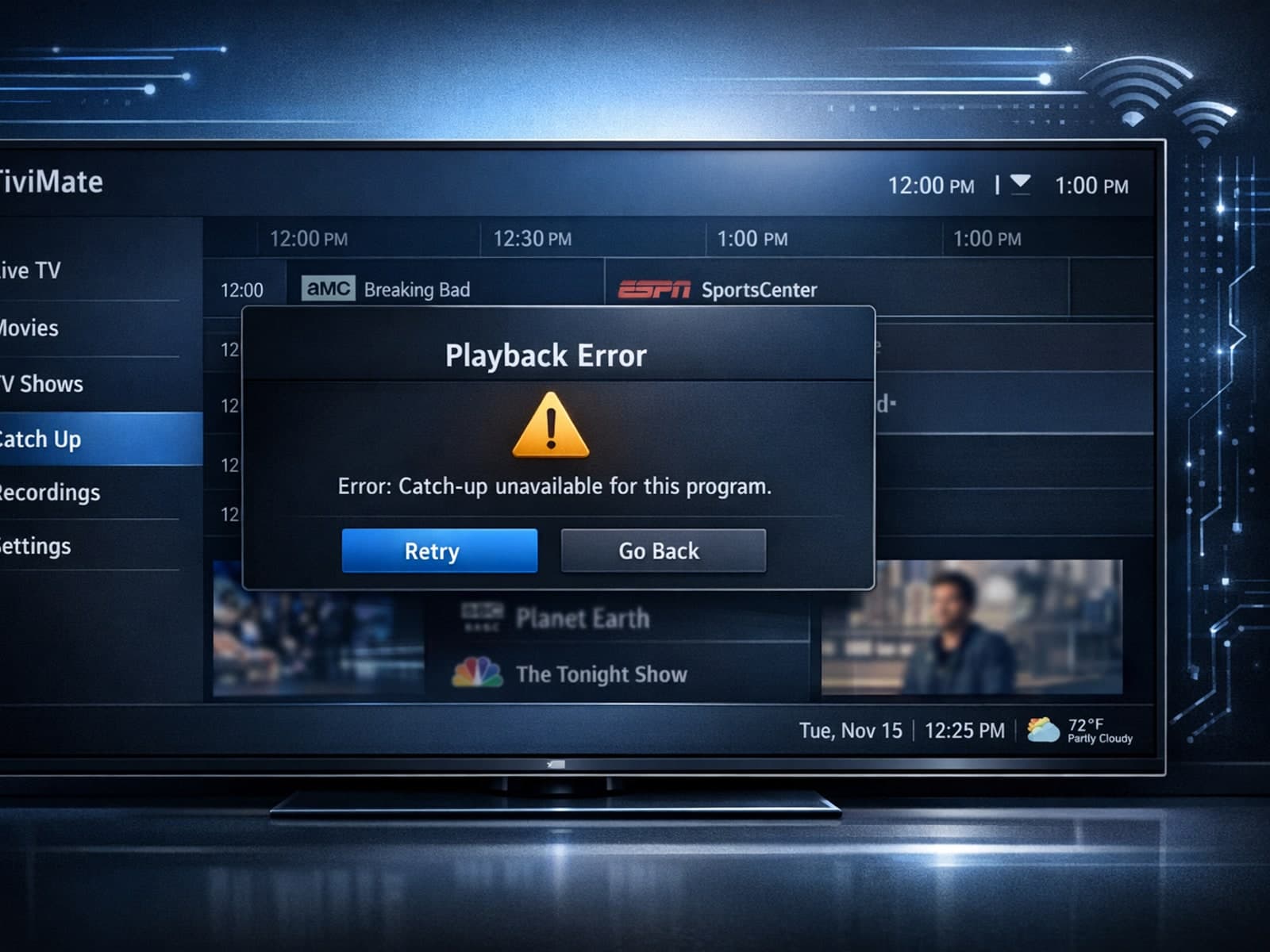
If your catch-up feature in TiviMate isn’t working, the fundamental reasons often lie in your IPTV playlist source or server configuration rather than the app itself.
